
COLUMN
THE SKILL OF A MASTER
CRAFTSMAN.
The Difference Between Ceremonial and Culinary
2026.06.22
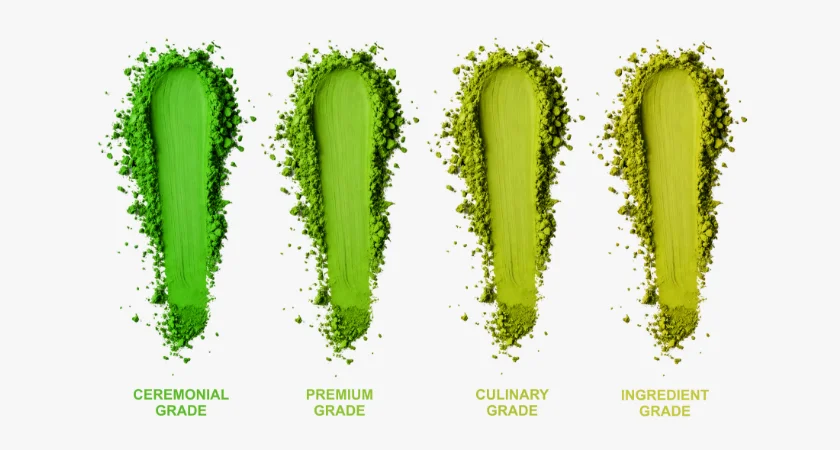
When selecting matcha, you may have come across labels such as “Ceremonial” (for tea ceremony, drinking, or koicha use) and “Culinary” (for confectionery, cooking, and processing).
At first glance, these terms may appear to indicate a simple distinction between “high grade” and “low grade.”
However, the difference actually has a bit more depth.
In this column, we would like to explore these categories not as a hierarchy of quality, but as distinctions designed around intended use.
What Does “Grade” Really Mean?
To begin with, it is important to understand that there is no universal or officially standardized grading system for terms like “Ceremonial” or “Culinary.”
These categories are primarily used in overseas markets as general guidelines, taking into account factors such as tea leaf quality, harvest timing, production methods, and flavor profile.
In other words, they are not simply rankings, but rather indicators of how the matcha is intended to be used.
Ceremonial Grade: Matcha for Pure Enjoyment
Ceremonial grade matcha is crafted to be enjoyed in its purest form, allowing the inherent qualities of the tea to be fully appreciated.
Its key characteristics include:
・Made from young, tender first-harvest leaves (spring)
・A vibrant, deep green color
・Minimal bitterness with natural sweetness and rich umami
・Exceptionally fine texture and smooth mouthfeel
These qualities are achieved through careful cultivation methods such as extended shading, meticulous selection, and traditional stone grinding.
In a preparation that involves nothing more than water, purity becomes everything.
The absence of harshness and the delicacy of aroma are revealed directly in each bowl.
This is the essence of ceremonial grade matcha.
Culinary Grade: Matcha Designed for Blending
Culinary grade matcha, on the other hand, is developed with blending and processing in mind.
Its key characteristics include:
・Made from more mature leaves (second harvest and beyond)
・A more pronounced bitterness and astringency
・A robust flavor that stands up to other ingredients
・Stability under heat and processing
In applications such as matcha lattes, baked goods, and desserts, it is essential that the flavor of matcha remains present even when combined with milk, sugar, or other components.
For this reason, culinary grade is valued not for its delicacy on its own, but for its role in supporting the overall balance of a finished product.
The Difference Is Not Superiority, but Optimization
What matters most is not which grade is superior, but whether it is suited to its intended purpose.
For example:
・Using ceremonial grade in baked goods may diminish its nuanced flavor while increasing cost unnecessarily
・Using culinary grade for straight drinking may result in excessive bitterness, masking its potential
Only when the intended use and the grade are aligned can the matcha deliver its true value.
What Defines “Good Matcha”?
So how should we determine what makes “good matcha”?
It is not simply a matter of checking the label.
Rather, it involves considering multiple perspectives:
・What kind of raw materials are used
・How the matcha is cultivated and processed
・How you intend to enjoy it
“Higher price” does not automatically mean better.
Nor does “ceremonial” mean universally superior.
Matcha, by its nature, should be selected according to purpose and experience.
Closing Thoughts
“Ceremonial” and “Culinary” do not represent a difference in quality, but rather a difference in design and intention.
Is the matcha meant to be appreciated as a single, carefully prepared bowl?
Or is it intended to expand possibilities as an ingredient?
Understanding this distinction allows for a richer and more thoughtful relationship with matcha.
In product development, especially, the act of choosing the right matcha can ultimately enhance the value of the final creation.